

Follow the water.
Listen to the grove.
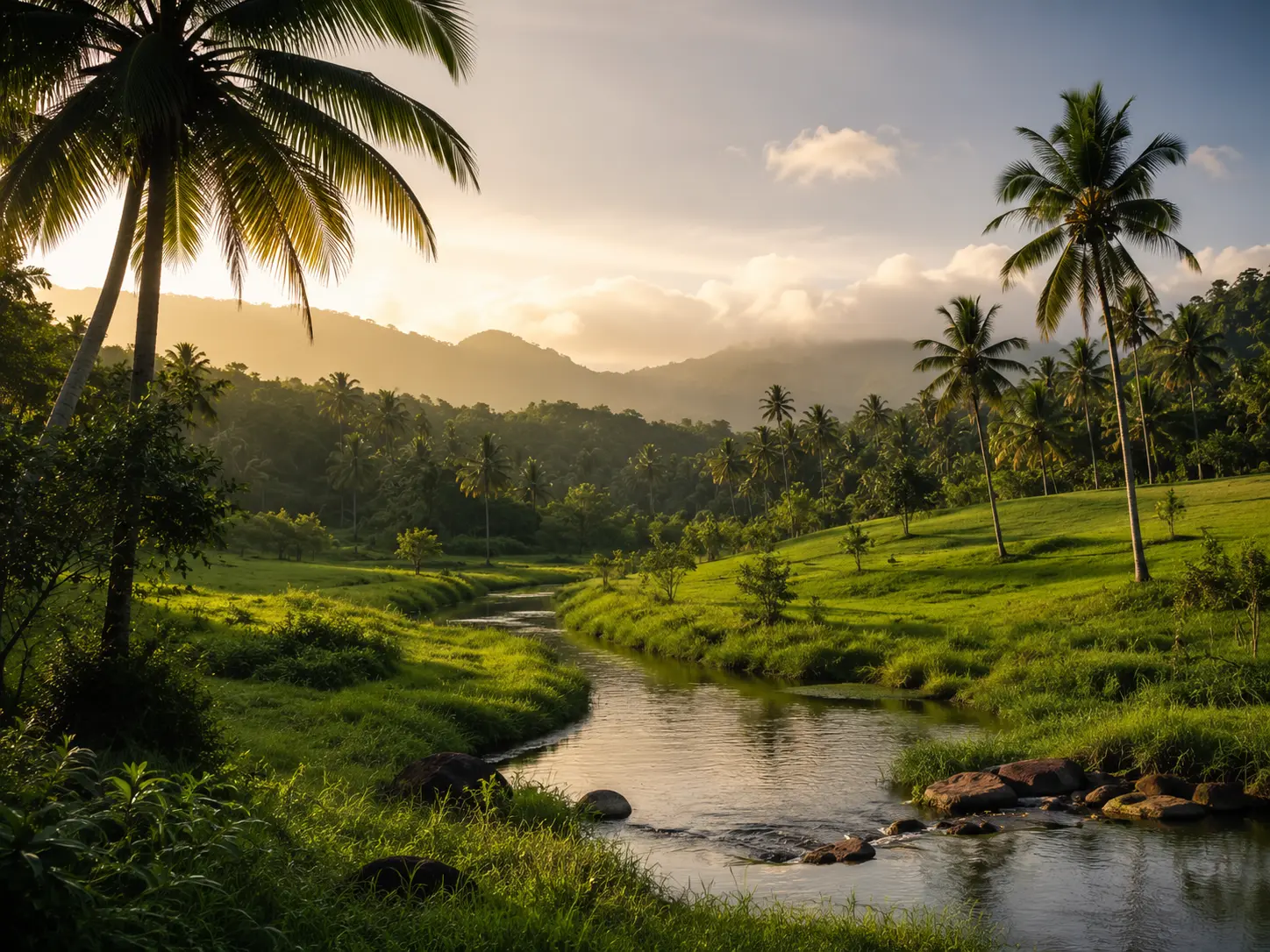
Explore a living countryside landscape shaped by coconut palms, ponds, streams, paddy views, birds, butterflies and the quieter rhythms of rural Sri Lanka.
Nature is not a backdrop here
Palm Grove Hideaway is shaped around an existing rural landscape where coconut cultivation, water, paddy surroundings and small natural habitats remain closely connected.
The estate is intended to offer more than attractive views. Guests are invited to slow down, observe changing light, listen to birdlife, follow the movement of water and notice the small details that are often missed in everyday travel.
Conditions across the landscape may change with the season, rainfall, agricultural activity and time of day. This natural variation is part of the experience.
 01
01
A quiet surface shaped by light and season
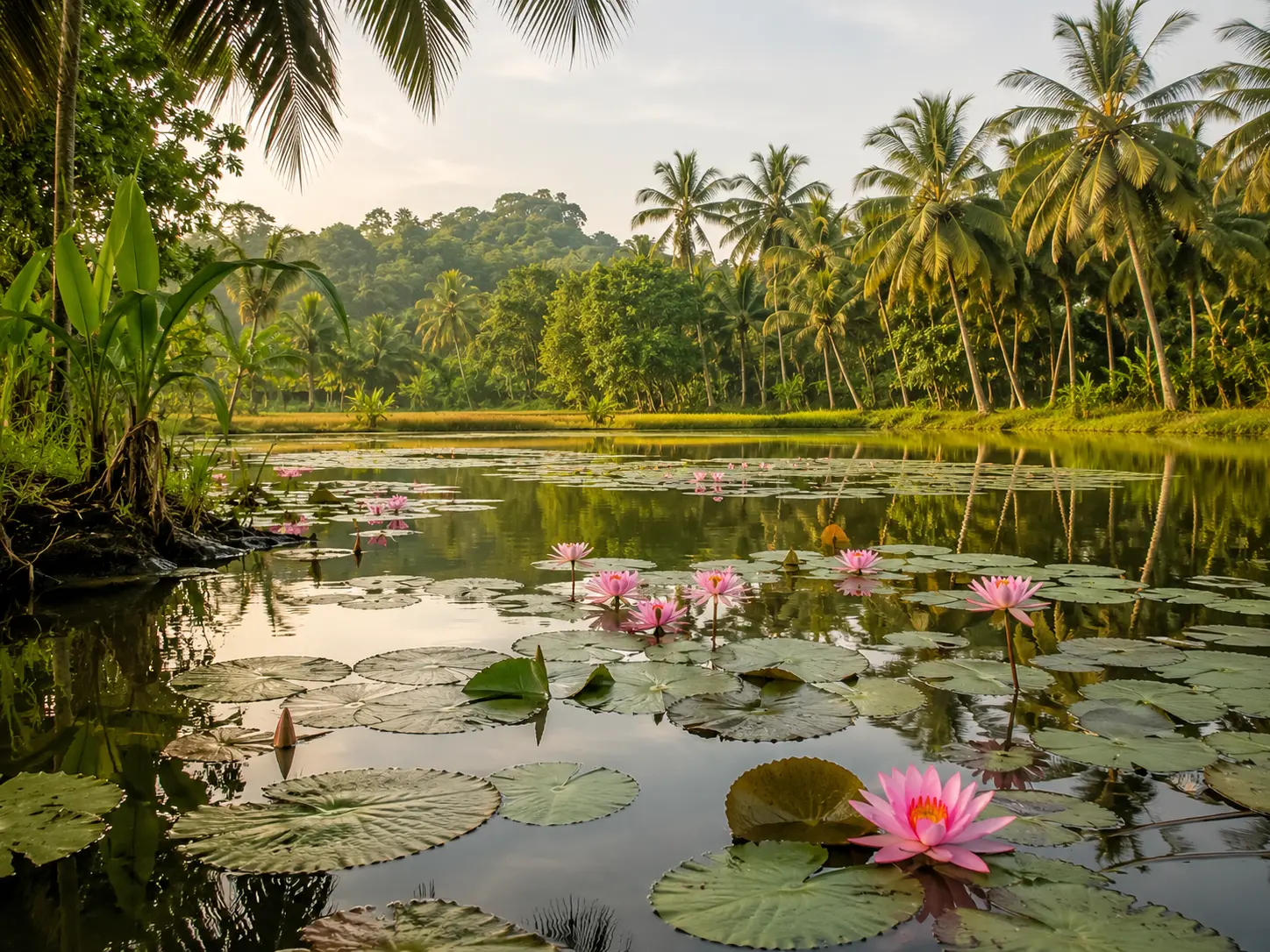
The lotus pond creates a peaceful natural pause within the estate, reflecting the sky, surrounding palms and changing light throughout the day.
Lotus flowers and leaves bring colour and texture to the water, while small movements beneath and around the surface reveal the pond as a living habitat.
Guests can enjoy the setting for quiet observation, photography and restful moments without disturbing its natural life.
- Seasonal lotus flowers and natural reflections
- A peaceful setting for observation and photography
- Aquatic habitat supporting smaller forms of life
- Appearance may change with rainfall and season
 02
02
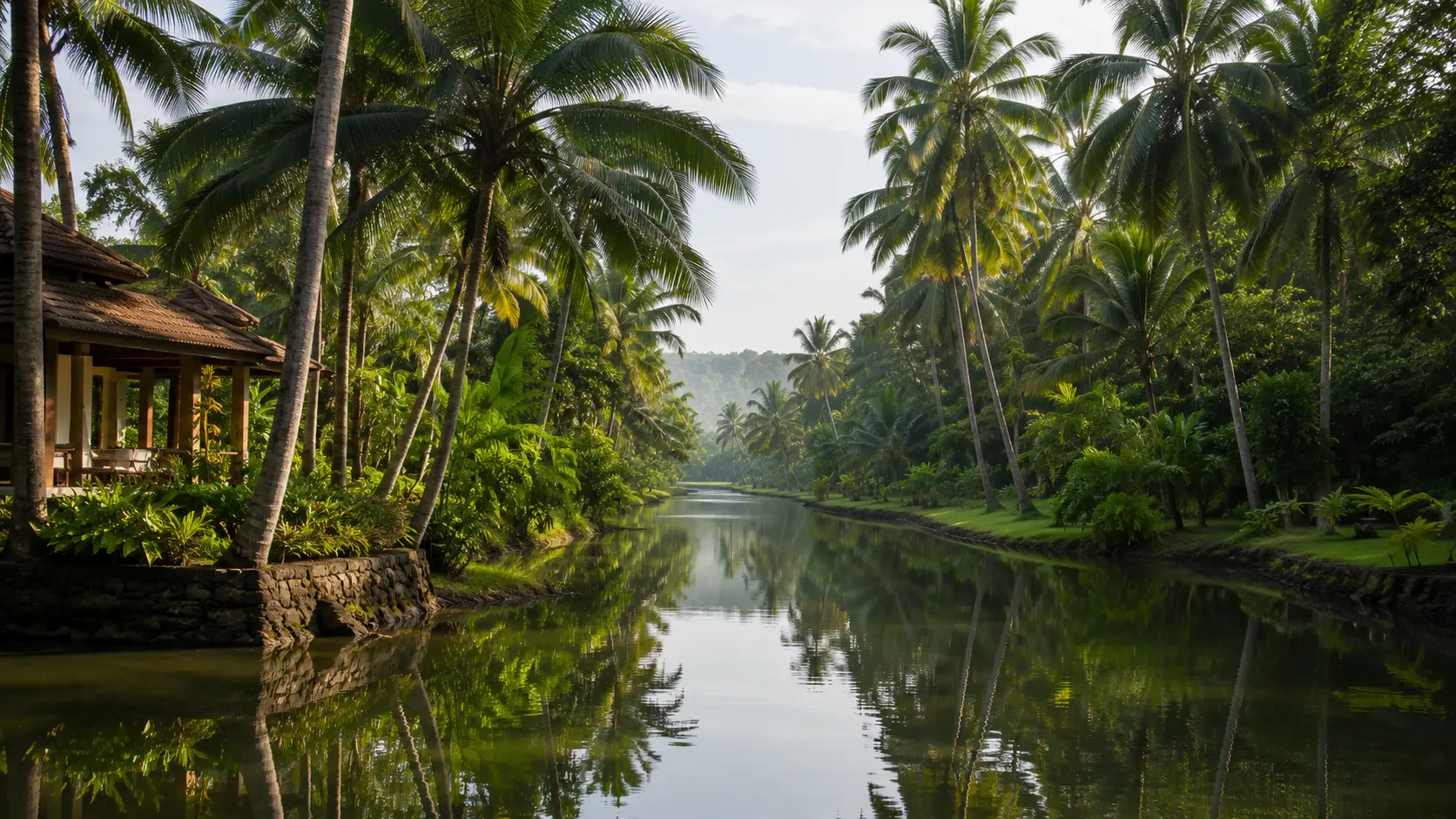
Follow the water through the estate
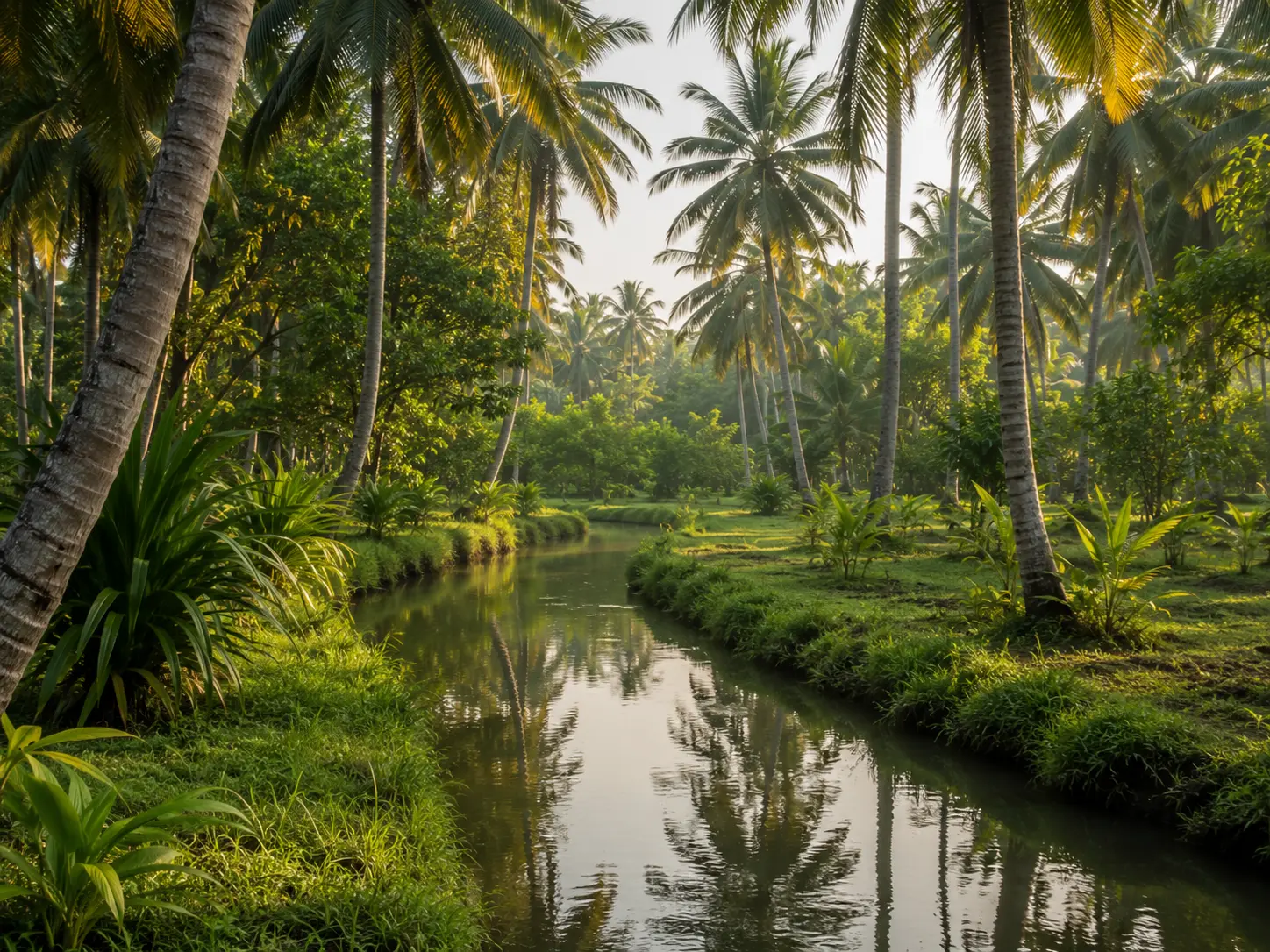
Water channels and smaller streams move quietly through Palm Grove, connecting cultivated areas, shaded habitats and natural pockets of life.
Flowing water can bring a cooler and more restful atmosphere to the surrounding landscape. Its sound and movement form part of the slower rhythm guests experience across the estate.
Water levels and flow naturally depend on rainfall, seasonal conditions and the estate’s wider water-management needs.
- Gentle water movement through the estate
- Connections between ponds and natural habitats
- Cooling, restful waterside surroundings
- Seasonal conditions affect flow and water levels
 03
03
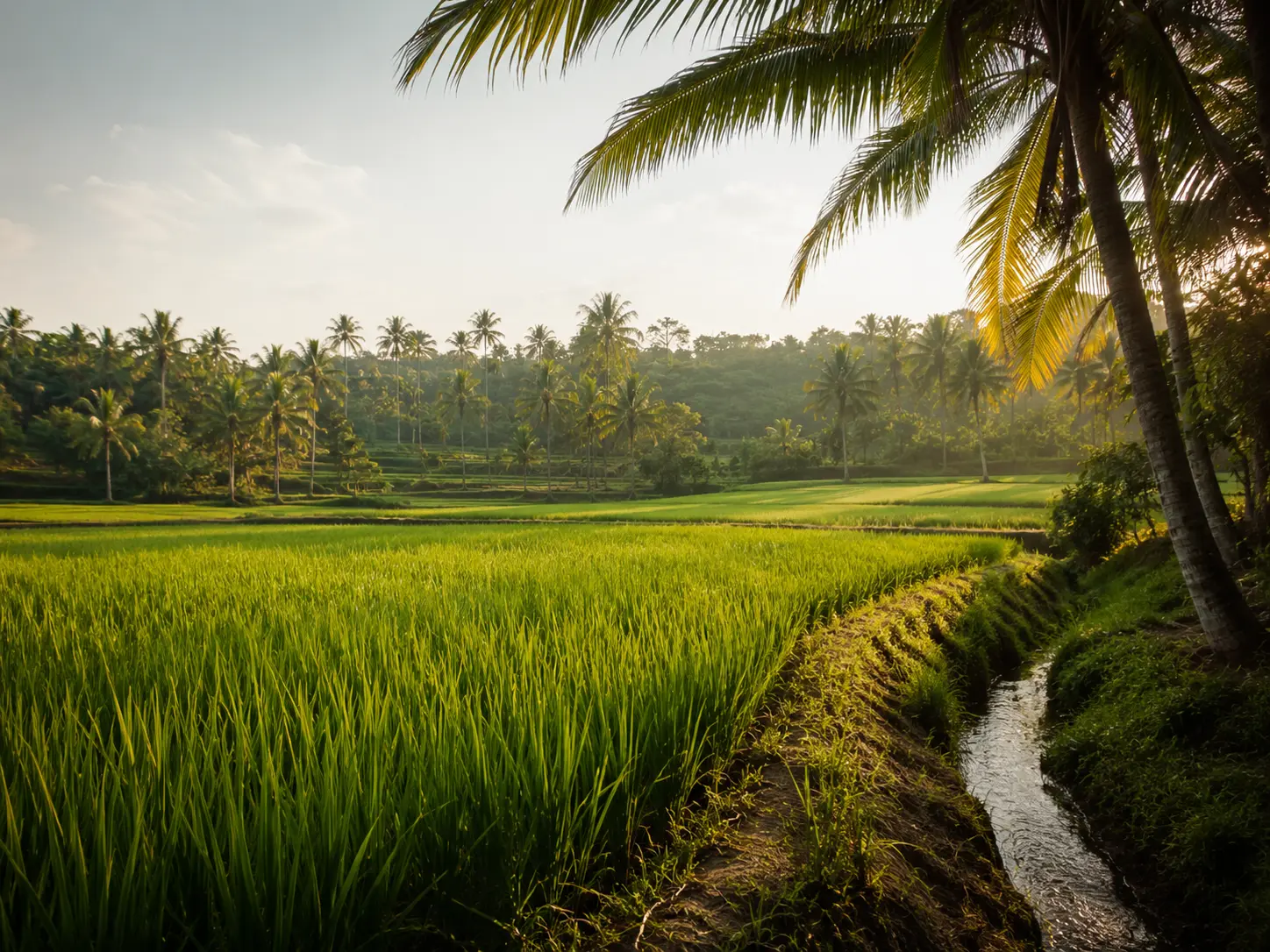
Open countryside shaped by cultivation
The nearby paddy landscape brings openness, seasonal colour and a strong connection to traditional countryside life.
Its appearance changes through preparation, planting, growth and harvest. These stages reveal the relationship between rainfall, agriculture and the daily life of the surrounding community.
At different times, the fields may appear as reflective water, young green growth, mature crops or resting land between cultivation cycles.
- Open views across the rural landscape
- Seasonal planting and harvesting cycles
- A close connection to village agriculture
- Changing colours throughout the year
 04
04
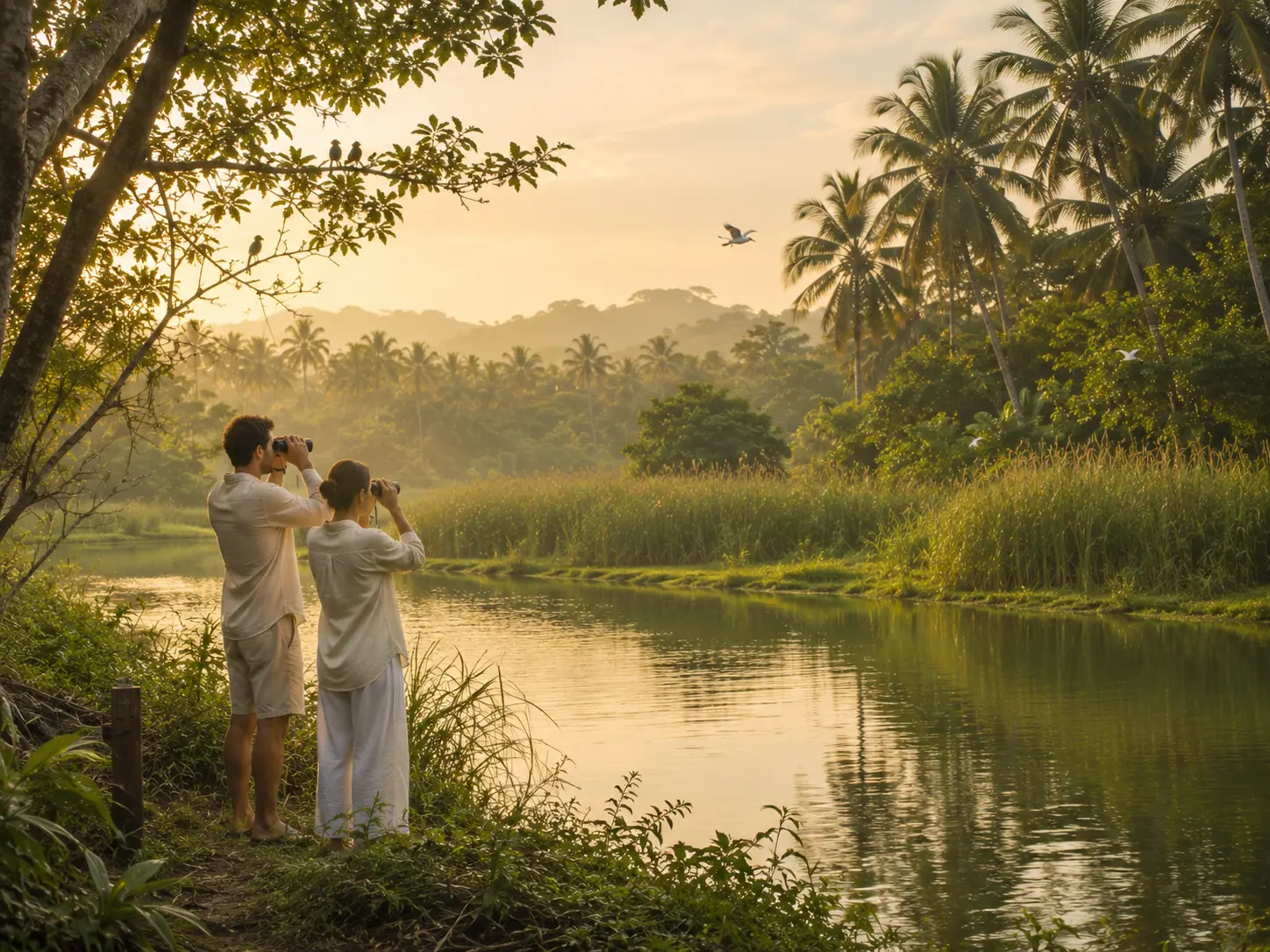
Listen for life between the leaves
Palms, waterways, cultivated land and nearby village habitats provide varied surroundings for resident and visiting birds.
Early mornings and quieter parts of the day can be especially rewarding for listening and observation. Species and activity naturally vary with season, weather and migration.
Guests are encouraged to watch from a respectful distance and avoid approaching nests, feeding wildlife or disturbing resting birds.
- Birdlife connected to palms and waterways
- Morning and late-afternoon observation
- Seasonal and visiting species may be present
- Wildlife sightings cannot be guaranteed
 05
05
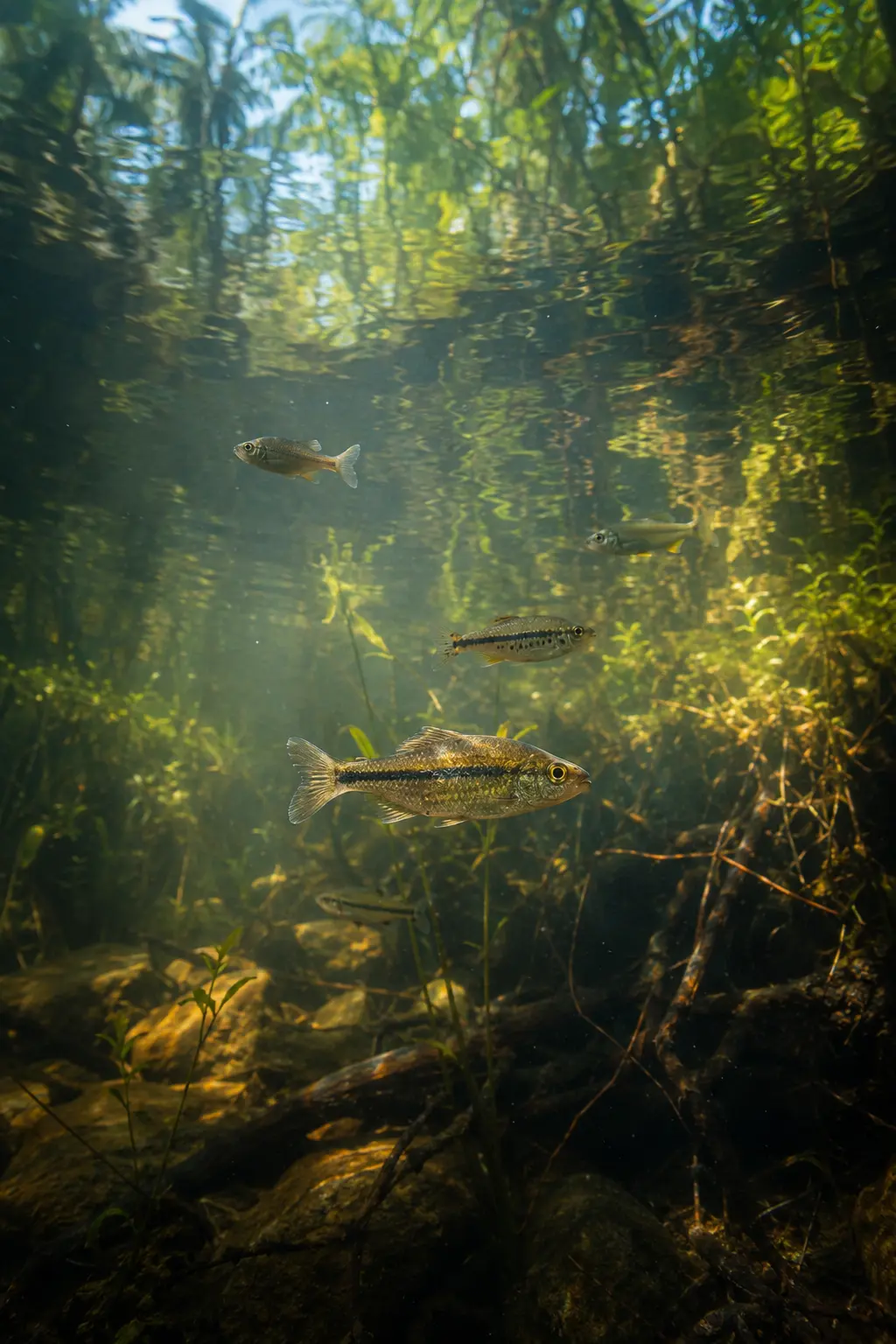
Aquatic life beneath the surface
Ponds, channels and gently flowing water support fish and other aquatic life as part of the estate’s connected natural system.
Guests may notice fish moving beneath reflections, gathering near vegetation or responding to changing light and water conditions.
These habitats should be observed without entering sensitive areas or introducing food and other materials into the water.
- Fish living within ponds and connected waterways
- Quiet observation from suitable waterside areas
- Aquatic habitats shared with plants and other wildlife
- Visibility varies with water and weather conditions
 06
06
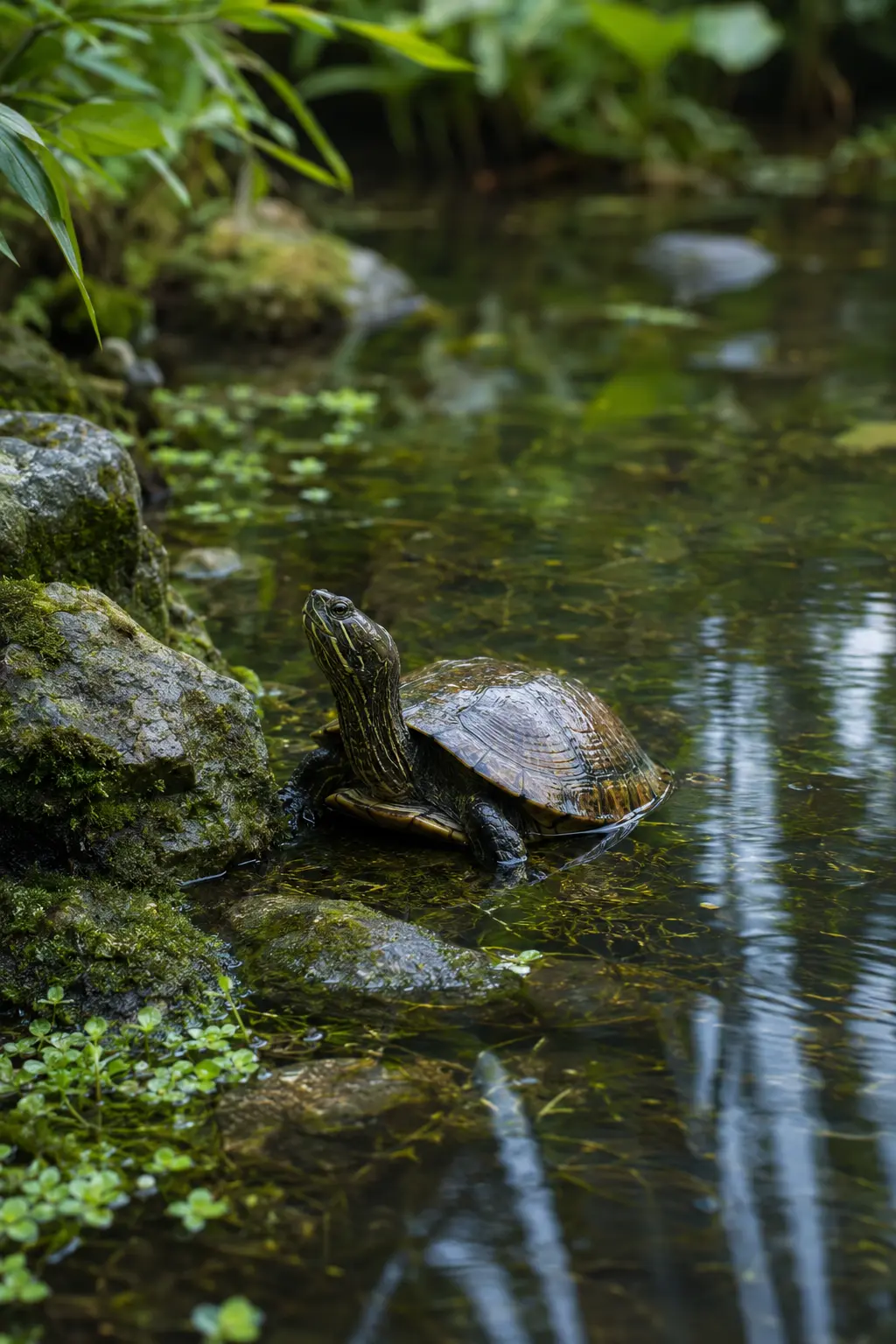
Quiet life around freshwater habitats
Turtles form part of the quieter wildlife associated with the estate’s ponds, channels and suitable freshwater surroundings.
They may sometimes be noticed resting near the water or moving slowly through their habitat. Their presence depends on natural conditions and should never be treated as a guaranteed sighting.
Guests should maintain a respectful distance and avoid touching, feeding, chasing or moving turtles encountered around the estate.
- Freshwater habitat within the wider estate ecosystem
- Occasional opportunities for quiet observation
- Natural sightings depend on suitable conditions
- Wildlife must not be touched, moved or fed
Let the landscape become part of your stay
Choose your preferred stay, share your dates and begin planning a quieter visit shaped by palms, water, countryside and the changing rhythms of the estate.